On this page
The short answer
Clean a Pokémon card with a clean, dry microfiber cloth: wash and dry your hands, lay the card flat, and wipe with almost no pressure from the center out to lift dust and fingerprints. Skip water, alcohol, sprays, erasers and pressing. PSA treats cleaning sprays, wax and pressed creases as alteration and won’t give the card a number grade.
Most cards don’t need cleaning at all. They need a wipe. The dust, lint and thumbprints that pile up in a binder sit on top of the card’s gloss and come off with a dry cloth. Everything people do beyond that, from a damp cotton swab to a “card polish,” trades a small cosmetic gain for a real chance of hazing the holo, warping the stock or getting the card sent back from the grader without a number.
How do you clean a Pokémon card safely?
With a dry, clean microfiber cloth, a light hand and nothing else. The goal is to lift what’s sitting on the surface, not to change the surface itself.
- Wash and fully dry your hands. Skin oil and hand cream are what turn into fingerprints on the gloss. No lotion beforehand.
- Work on a hard, clean, flat surface. A desk wiped free of crumbs, or a sheet of clean printer paper on it. A soft mat lets the card flex while you wipe, and flexing is how you get dents and wrinkles.
- Get loose dust off first, without touching the card. A soft, clean makeup or lens brush, or a gentle puff from a hand blower. Grit you drag across the card with a cloth is what leaves fine scratches.
- Wipe the front from the center out, with almost no pressure. Hold the card down by an edge with one finger and pass a folded, clean microfiber cloth outward toward each edge. Let the cloth do the work. Don’t rub back and forth, and don’t wipe toward a corner and off it, which can catch and soften the tip.
- Turn it over and do the back the same way. Graders look at both sides. The blue back of a Pokémon card shows smudges plainly under light.
- Check it under a bright light at an angle. Tilt the card under a desk lamp. Anything still there after two gentle passes is probably not dirt, so stop.
- Sleeve it straight away. A clean penny sleeve the moment you’re done, so you don’t have to clean it twice.
Holo, reverse holo and full art cards need an even lighter touch
Foil and textured surfaces show fine scratches far more than a plain card does, and vintage holos from the early sets are the most fragile of all. On these, use the brush first, then one or two cloth passes with no pressure at all. If a fingerprint on a holo doesn’t lift, leave it. A grader will forgive a print a sleeve protects far sooner than a hairline scratch you put there.
What should you never use to clean Pokémon cards?
Anything wet, anything abrasive, anything that adds a coating and anything that reshapes the card. The table lists the usual suspects, what they do to a card, and where PSA’s published no-grade codes put them.
- Dry microfiber cloth, soft brushSafeWhat it does to the card Lifts dust and fingerprints from the surfacePSA outcome None: this is ordinary care
- Water, even distilledWhat it does to the card Soaks into the paper at the cut edges, can warp the card or leave a ringPSA outcome Not named, but any damage counts against the grade
- Rubbing alcohol, glass cleanerWhat it does to the card Can dull the gloss, cloud holo foil and lift inkPSA outcome Not named, but any damage counts against the grade
- Card cleaning spray, polish or waxWhat it does to the card Leaves a coating on the surfacePSA outcome N7 Evidence of Cleaning or N5 Altered Stock
- Eraser on marks or the borderWhat it does to the card Rubs away gloss and ink along with the markPSA outcome Not named; CGC lists power erasing as tampering, and a pencil mark’s dent still earns PSA’s MK
- Whitener or marker on worn edgesWhat it does to the card Covers whitening with new colorPSA outcome N7 (whitener) or N3 Evidence of Recoloration
- Pressing a bend or crease (books, heat, humidity)What it does to the card Flattens the card but leaves the stock changedPSA outcome N5 Altered Stock
- Trimming a rough edgeWhat it does to the card Cuts away card stockPSA outcome N1 Evidence of Trimming
| Method | What it does to the card | PSA outcome |
|---|---|---|
| Dry microfiber cloth, soft brushSafe | Lifts dust and fingerprints from the surface | None: this is ordinary care |
| Water, even distilled | Soaks into the paper at the cut edges, can warp the card or leave a ring | Not named, but any damage counts against the grade |
| Rubbing alcohol, glass cleaner | Can dull the gloss, cloud holo foil and lift ink | Not named, but any damage counts against the grade |
| Card cleaning spray, polish or wax | Leaves a coating on the surface | N7 Evidence of Cleaning or N5 Altered Stock |
| Eraser on marks or the border | Rubs away gloss and ink along with the mark | Not named; CGC lists power erasing as tampering, and a pencil mark’s dent still earns PSA’s MK |
| Whitener or marker on worn edges | Covers whitening with new color | N7 (whitener) or N3 Evidence of Recoloration |
| Pressing a bend or crease (books, heat, humidity) | Flattens the card but leaves the stock changed | N5 Altered Stock |
| Trimming a rough edge | Cuts away card stock | N1 Evidence of Trimming |
Water deserves a word, because a lot of video advice suggests a barely damp cloth with distilled water. PSA’s rules don’t mention water, and some collectors use it carefully. The problem is the card, not the rule: a Pokémon card is layers of paper with the gloss on the faces only, so moisture that reaches an edge gets into the core and can ripple the card or leave a tide mark. A smudge that a dry cloth won’t move is rarely worth that risk on a card you plan to grade.
When does cleaning a card count as altering it?
When you add something to the card or take something away from it, beyond loose dirt. Wiping off dust and fingerprints is care. Coating the surface, removing part of the card, recoloring it or reshaping it is alteration, and both PSA and CGC say so in writing.
PSA’s grading standards say it won’t grade cards that show trimming, recoloring, restoration “or any other forms of tampering.” Its no-grade codes spell out what that means for cleaning:
- N1 Evidence of TrimmingPSA’s description, shortened An edge appears altered with a blade or scissorsCan it be slabbed as Authentic Altered? At the grader’s discretion, if AA was the minimum grade
- N2 Evidence of RestorationPSA’s description, shortened Paper stock built up, e.g. a torn corner rebuiltCan it be slabbed as Authentic Altered? At the grader’s discretion, if AA was the minimum grade
- N3 Evidence of RecolorationPSA’s description, shortened Color artificially improvedCan it be slabbed as Authentic Altered? At the grader’s discretion, if AA was the minimum grade
- N5 Altered StockPressingPSA’s description, shortened Crease or wrinkle pressing, scratch removal, enhanced gloss, or a foreign substance like cleaning spray or waxCan it be slabbed as Authentic Altered? At the grader’s discretion, if AA was the minimum grade
- N7 Evidence of CleaningCleaningPSA’s description, shortened Whitener on borders, a solution to remove stains, or cleaning spray or wax on the surfaceCan it be slabbed as Authentic Altered? At the grader’s discretion, if AA was the minimum grade
| Code | PSA’s description, shortened | Can it be slabbed as Authentic Altered? |
|---|---|---|
| N1 Evidence of Trimming | An edge appears altered with a blade or scissors | At the grader’s discretion, if AA was the minimum grade |
| N2 Evidence of Restoration | Paper stock built up, e.g. a torn corner rebuilt | At the grader’s discretion, if AA was the minimum grade |
| N3 Evidence of Recoloration | Color artificially improved | At the grader’s discretion, if AA was the minimum grade |
| N5 Altered StockPressing | Crease or wrinkle pressing, scratch removal, enhanced gloss, or a foreign substance like cleaning spray or wax | At the grader’s discretion, if AA was the minimum grade |
| N7 Evidence of CleaningCleaning | Whitener on borders, a solution to remove stains, or cleaning spray or wax on the surface | At the grader’s discretion, if AA was the minimum grade |
Read N5 and N7 together and the line is clear: a cloth is fine, a product is not. “Scratch removal” and “enhanced gloss” also rule out the polishes sold to make a scuffed holo look new. If it works by filling, buffing or coating the surface, PSA treats it as alteration.
CGC prints “Authentic Altered” in the grade box when a card is genuine but has been altered, and gives recoloring and trimming as examples. Its terms of service go further: by submitting, you confirm the card has no undisclosed alterations, a list that includes trimming, re-coloring, bleaching, power erasing and “any other method used to change or enhance the appearance” of a card. Power erasing is the eraser trick under another name.
What happens if PSA thinks your card was cleaned?
It comes back without a number, and you pay anyway. PSA returns a no-grade card in a card saver sleeve and charges the applicable grading fee, which was $59.99 a card at its cheapest tier on 25 October 2026 (Standard; the Value tiers are paused). It only goes in a slab as Authentic Altered if you listed AA as the minimum grade on the form, where that option exists, and the grader agrees. An AA label tells every future buyer the card was worked on, and it sells for far less than a numbered copy. The full list of outcomes is in the PSA grading scale guide.
Is there a way to clean whitening on Pokémon cards?
No, because whitening isn’t dirt. It’s the white paper core showing where the colored ink has chipped or worn away along an edge or corner, and the only way to hide it is to add color back, which PSA calls recoloration (N3).
Before you write a card off, check the difference. Grime sitting on an edge looks grey or brown, sits on top of the ink and lifts with a soft brush. Whitening is bright white, has a crisp shape and is part of the edge itself. On the blue back of a Pokémon card it shows up as white flecks along the border, which graders read as edge wear. How much whitening each grade allows is in the Pokémon card condition guide.
Should you clean Pokémon cards before grading?
Yes, wipe them, but don’t clean them. A fingerprint left on a card can be read as a surface flaw, and PSA’s Gem Mint 10 asks for full original gloss and no staining of any kind, so a dry wipe is worth the minute. Anything more is the alteration risk above.
Graders themselves see wiping as normal. Sports Illustrated reported on 4 October 2026 that PSA floated a pre-grading cleaning add-on in a 2025 customer survey, and that its president described it as wiping away fingerprints, smudges and dirt, something graders already sometimes do. That is the same line this guide draws: wipe, don’t treat. PSA hasn’t announced the service on its site.
- Inspect the card before you touch it. Bright lamp, card tilted, both sides. Note scratches, print lines and dents now, so you know what’s a flaw and what’s dirt.
- Brush, then wipe front and back. The dry method above. Two light passes, no more.
- Look again with a loupe or your phone’s zoom. Check all four corners and edges for whitening and the surface for scratches. This is where most cards show they aren’t a 10.
- Measure the centering. PSA’s 10 allows about 55/45 on the front and 75/25 on the back. A card that misses this can’t be a 10 however clean it is.
- Decide which cards are worth the fee. Grade the ones where a high grade is a real chance and the grade adds more than it costs. Keep the rest raw.
- Sleeve and hold, the way the grader asks. PSA’s shipping guide asks for a clear penny sleeve inside a semi-rigid holder, 3 5/16 by 4 7/8 inches for standard cards, and no top loaders, tape or sticky notes.
The full order, from the online form to packing the box, is in how to submit cards to PSA.
How should you handle Pokémon cards?
By the edges, with clean, dry hands, over a clean table. Most of the marks people later try to clean off a card were put there by handling, so this is the cleaning advice that matters most.
- Hold it by the side edges, between thumb and finger, not by pinching a corner and not with a thumb on the face. Corners are where cards wear first.
- Wash your hands and let them dry before a session, and again after eating. Skip lotion.
- Keep food and drinks off the table. A drip is the one thing a cloth can’t fix.
- Pull cards from sleeves gently, tipping the sleeve so the card slides out instead of gripping the face. Slide it back in the same way, square to the opening, so the top edge doesn’t catch.
- Don’t bend a card to free it from a tight sleeve or binder pocket. Cut the sleeve instead.
- Gloves are optional. Cotton gloves can shed lint and make cards slip, so clean, dry hands are usually better. Thin nitrile gloves work if you prefer them.
Once a card is clean, keep it that way: a penny sleeve and a top loader or a side-loading binder for anything you care about, stored flat, cool and dry. The Pokémon card storage guide covers which supplies to use.
How do you clean old, dirty Pokémon cards?
The same way, with more patience: brush off the loose dirt, wipe gently, and accept what won’t come off. Old binder cards usually have dust, lint and fingerprints that lift easily, and stains, tape residue or sticker glue that don’t.
For stains and residue, the honest answer is to leave them. Removing them needs a solvent, and a solvent on the surface is exactly what PSA’s N7 describes. On a cheap card you play with or keep in a binder, you can do what you like with it, since no grader will see it. On anything you might grade or sell as near mint, a mark you leave is priced in, while a mark you remove badly can cost the whole grade. If you aren’t sure whether an old holo is even genuine, check that first with how to tell if a Pokémon card is fake.
Is your card worth grading once it’s clean?
Only if the grade it’s likely to get sells for clearly more than the card does raw, after the grading fee and postage both ways. A clean surface helps, but corners, edges and centering decide most grades, and many modern cards sell for about the same in a PSA 9 as raw. The sum is laid out in is it worth grading Pokémon cards.
Questions people ask
Can you use water to clean Pokémon cards?
It’s best not to. PSA’s rules don’t name water, but moisture that reaches the cut edge soaks into the paper core and can warp the card or leave a mark. A dry microfiber cloth removes almost everything that water would.
Can I use rubbing alcohol or a card cleaning spray?
No. Alcohol can dull the gloss and cloud holo foil, and PSA lists cleaning spray or wax on the surface under Evidence of Cleaning (N7) and Altered Stock (N5). Either can send a card back without a number grade.
Can you remove scratches from a holo Pokémon card?
Not without altering it. PSA names scratch removal and enhanced gloss as Altered Stock, so polishes that hide scratches put the card at risk of a no-grade. A scratch is part of the card’s condition and is graded as such.
Can you flatten a bent Pokémon card?
You can, but a grader may treat it as altered. PSA lists crease and wrinkle pressing under Altered Stock (N5), and a pressed crease usually still shows under light. Store a bent card flat and grade it as it is, or keep it raw.
Does PSA clean cards before grading?
PSA doesn’t list a cleaning service on its site. In a 2025 survey it floated a wipe-only add-on for fingerprints, smudges and dirt, as reported by Sports Illustrated in October 2026. Wipe your own cards with a dry cloth before you send them.
Do I still pay if PSA says my card is altered?
Yes. PSA charges the grading fee for cards it returns with a no-grade code for trimming, restoration, recoloring, altered stock or cleaning, whether it slabs the card as Authentic Altered or returns it in a sleeve.
Sources
- PSA, Grading standards: Gem Mint 10, ungradable cards, MK qualifier and no-grade codes N1 to N9 (checked 25 October 2026)
- PSA, Trading card grading service levels and prices (checked 25 October 2026)
- PSA, Shipping guide: penny sleeves and semi-rigid holders (checked 25 October 2026)
- CGC Cards, Grading scale and designations, including Authentic Altered (checked 25 October 2026)
- CGC, Services terms and conditions: tampering and alterations (checked 25 October 2026)
- Sports Illustrated, “Card care vs. card alteration: where is the line,” David Solow, 4 October 2026 (checked 25 October 2026)
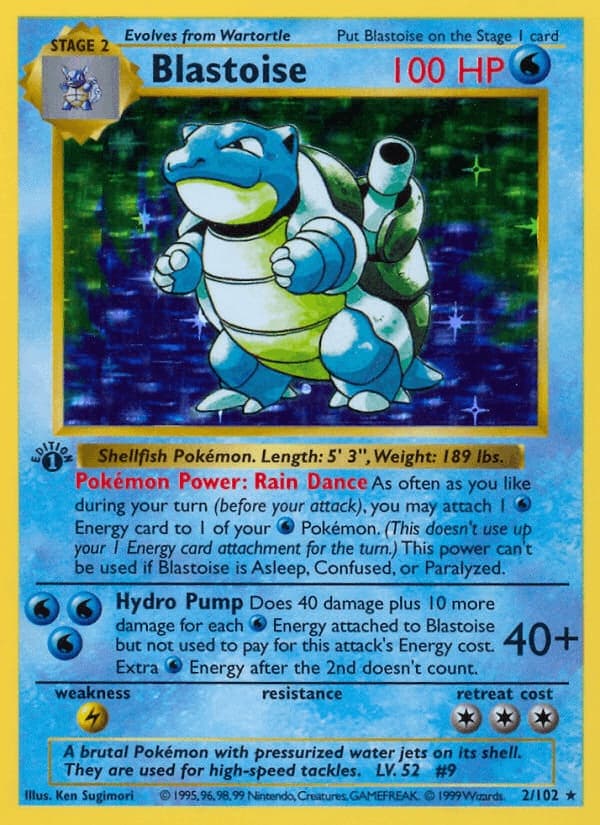
- TCGdex, Blastoise 2/102, Base Set (card image)
Buddy is independent and isn’t affiliated with PSA, CGC, Beckett, TAG, SGC or The Pokémon Company. Fees and prices change; we re-check them when we update a guide.