On this page
- Quick answer
- Why people look for an alternative to TAG
- The options at a glance
- TAG grading: what you get and where it falls short
- PSA: the established slab with the widest tier ladder
- SGC: the lowest listed per-card fee
- Buddy: estimate your odds before you pay any grader
- Should I buy PSA 9 or raw?
- TAG Gem Mint 10 vs PSA 10, and whether grading baseball cards pays
- How to choose
- Frequently asked questions
- Sources
TAG grading is reliable in one specific sense: it grades with digital imaging and publishes a report for every card, so the same card should get the same result each time. Whether it is better than PSA, SGC or CGC depends on what you want from the slab: transparency, resale recognition, speed or price.
This list is published by the makers of Buddy and judged by the criteria below: how the grade is produced, what the service costs per card, how long it takes, and how well the slab sells.
Quick answer
- Best for collectors who want a data report with every slab: TAG, because every service tier includes a QR-accessible Digital Imaging and Grading (DIG) report1.
- Best for the widest published tier ladder: PSA, because its price page lists tiers from $39.99 to $9,999+ per card2.
- Best for the lowest per-card fee: SGC, with published rates including a Standard tier at $30 a card3.
- Best for estimating your card's TAG and PSA odds before you pay: Buddy, because it estimates the grade a card would get from photos.
I compare four options: TAG, PSA, SGC and Buddy. The criteria are in the intro above. Other grading companies are excluded here to focus on the most popular services for trading cards.
Why people look for an alternative to TAG
Collectors usually leave TAG over access, turnaround and resale recognition rather than over the quality of its reports. TAG's own site banners a "LIMITED REOPENING" and a backlog tracker4. If you cannot submit when you want, you look elsewhere.
Turnaround is the second reason. TAG's help centre, as of October 2026, lists estimated times from 90 business days on Value down to 3-5 business days on Premier1. Value also needs a 10-card minimum order and Base needs 5 cards, which rules out single-card submissions on the cheap tiers.
The third reason is market trust. CenterGrade describes PSA as the one with the "highest resale value (established)" and TAG as "growing rapidly"5. That is one site's view, but it matches what many sellers weigh before choosing a grader.
The options at a glance
The table compares entry prices and the main trade-off for each option. Prices are per card unless stated and were read in November 2026. Four of the options have a stated price, so the table includes a price column.
| Option | Best for | Entry price and top tier | Main limit |
|---|---|---|---|
| TAG | Data-backed reports | $59.95 Standard (45 business days); $299.95 Premier, as of October 20261 | Cheap tiers have card minimums; reopening is limited4 |
| PSA | Market recognition, many tiers | $39.99 Value Bulk; $9,999+ Premium 102 | Step 1 Value services currently unavailable; human grading |
| SGC | Lowest listed fee | $30 Standard, per cardvaluefinder.com3 | Price comes from a third-party site |
| Buddy | Pre-submission estimate | Free plan; from $9.99 a month | Estimates only; it does not issue a grade |
Prices checked on 6 Nov 2026.
According to misprint.com, standard industry comparisons list PSA Economy at $20 a card and Standard at $506. TAG's own help page is newer and takes priority for TAG's tiers.
TAG grading: what you get and where it falls short
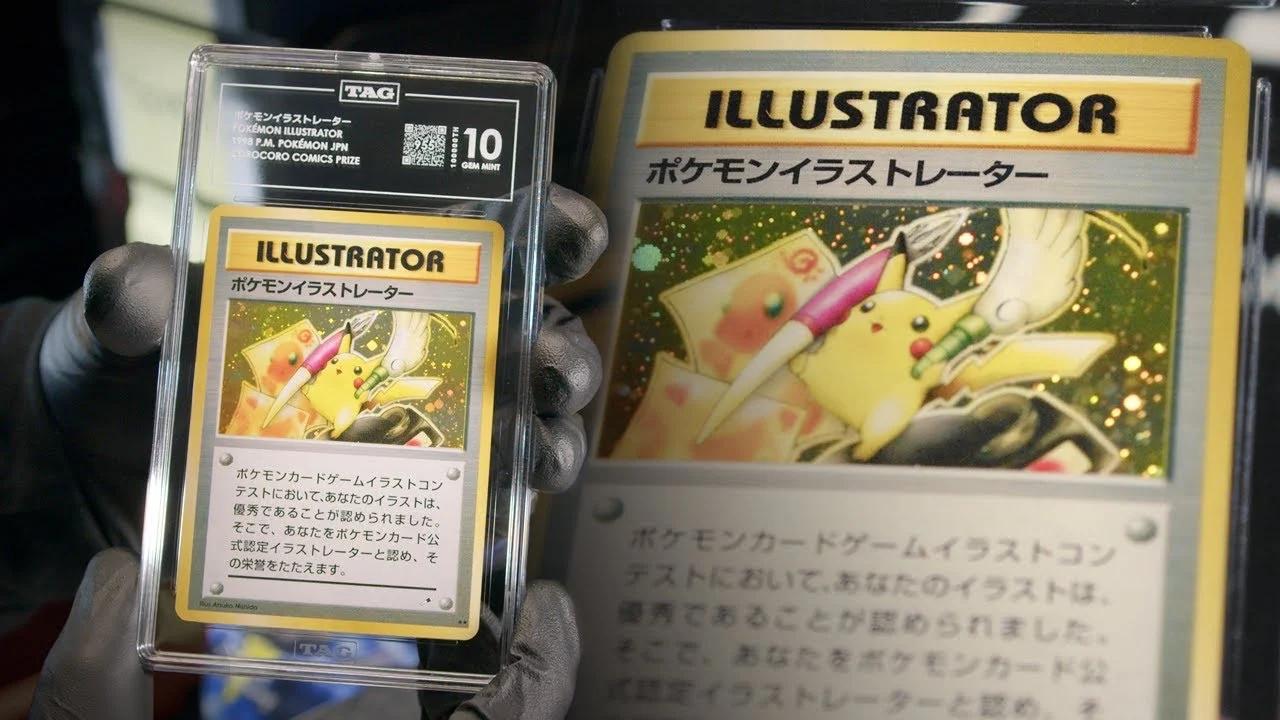
TAG suits collectors who want to see why a card got its grade. As of October 2026, every tier includes raw card images, slab imaging, UV protection and a QR-accessible DIG report1.
The tiers step up in price and speed. Standard is $59.95 a card at about 45 business days with $1,000 insurance. Priority is $79.95 at 30 days. Express is $149.95 at 10 days. Premier is $299.95 at 3-5 days and adds a DIG+ report with 1000-point subscores1.
CenterGrade describes TAG's method as AI and digital scanning with a 100-point scale, and says a TAG 10 needs 55/45 front and 60/40 back centering5. That is a third-party summary, so check TAG's rubric before relying on it.
The limits are access and resale recognition. TAG's site shows a limited reopening4, and CenterGrade says PSA still holds the strongest resale position5.
PSA: the established slab with the widest tier ladder
PSA suits collectors who prioritise recognition and need a tier for almost any card value. As of November 2026, its price page lists Value Bulk at $39.99 a card (90-100 business days, $500 maximum insured value) up to Premium 10 at $9,999+2.
In the middle, $79.99 buys 50-60 business days, $199.00 buys 20-30 business days with grader notes, and Super Express at $349 buys 10-15 days. Premium tiers run 5-7 business days from $999.002. PSA says turnaround times are estimates only and not guaranteed.
CenterGrade says PSA uses human graders and allows 55/45 front and 75/25 back centering for a 105. Its limit today: the page says Value services are temporarily paused, so the cheapest tier may not be open to you.
For a step-by-step submission walkthrough, see how a PSA submission works for Pokémon cards.
SGC: the lowest listed per-card fee
SGC suits collectors grading a batch of mid-value cards on a budget. Cardvaluefinder.com, as read in November 2026, lists SGC's Standard tier at $30 a card with about a 30-day turnaround, the cheapest fee from a major grader on that page3.
The same page lists PSA Economy at $25 a card and CGC Economy at $25, and says the Pokémon community often prefers CGC to PSA for Pokémon product3. That is one site's claim about community preference, not a measured result.
The limit is the source. These figures come from a third-party site, not SGC's own price page, so confirm the current fee with SGC. The page also warns that shipping, insurance and supplies can add $30-70 to a submission batch, so the real per-card cost runs higher3. For more tiers and timings, read the SGC cost guide.
Buddy: estimate your odds before you pay any grader
Buddy suits Pokémon collectors who want to know where a card is likely to land before paying TAG, PSA or anyone else. It is an AI-powered grader for iPhone: you photograph the card, and it estimates the grade a grading company would give.
The odds feature maps to the grader criterion. Buddy estimates the odds of each grade from PSA, CGC, Beckett, TAG and SGC, so one set of photos shows how a card might fare at each company before you send it anywhere.
Centering matters for a 10. Buddy measures centering against grader standards for a potential "10" grade, which helps you spot a card that will not pass before you pay a fee.
It also runs a fake check. Buddy examines lettering, numbers, print and foil against real cards, then gives pricing based on real sales data from platforms like eBay and TCGplayer, so you can weigh the grading fee against the value gain.
On price, Buddy is free with unlimited scans, 3 grades and 1 listing check a month. Pro is $9.99 a month or $59.99 a year, and you can buy a pack of 10 grades for $4.99. If you need an official slab, PSA fits better.
Should I buy PSA 9 or raw?
Buy a PSA 9 when the price gap to raw is small and you want a verified condition. Buy raw when the PSA 9 sells close to the raw price, because grading costs eat the difference. Cardvaluefinder.com gives a test: grading pays only when the PSA 10 value minus the raw value exceeds total grading cost3.
The same page warns that "a PSA 9 instead of PSA 10 can mean the card is worth less than raw" and gives a sample where a PSA 9 sells for only $250-300, barely covering costs3. That is why checking condition before submission matters.
TAG Gem Mint 10 vs PSA 10, and whether grading baseball cards pays
The two 10s differ in method and centering tolerance. CenterGrade says a PSA 10 allows 55/45 front and 75/25 back centering, while a TAG 10 requires 55/45 front and 60/40 back5. TAG also issues a 10 Pristine above its standard 101.
For baseball cards, the same break-even logic applies. Cardvaluefinder.com notes that outbound shipping ($10-30), return shipping ($15-40) and insurance ($5-50+) add to the fee, and a 5-card PSA Economy batch at $25 each comes to roughly $34 a card all-in3. Cheap cards rarely justify that.
How to choose
- Pick TAG if you want a data report on every slab and can wait for open submission windows1.
- Pick PSA if resale recognition matters most and you want a tier that fits your card's insured value2.
- Pick SGC if you are grading many cards and the fee per card drives your decision3.
- Pick Buddy if you want an estimate of each grader's odds, a centering check and a fake check before you pay any grading fee.
If you want a broader ranking, see the card grading services comparison.
Frequently asked questions
Is TAG grading reliable and how does it compare to established card grading services?
TAG is built around digital imaging and a report for every card, which supports consistent results1. PSA is the more established name for resale, according to CenterGrade5. For a direct comparison, read TAG vs PSA.
Should I buy PSA 9 or raw?
Buy raw when a PSA 9 sells near the raw price, because fees and shipping erase the gain. A PSA 9 can be worth less than the raw card once costs are added3.
What is the difference between a TAG Gem Mint 10 and a PSA 10?
CenterGrade lists a TAG 10 at 55/45 front and 60/40 back centering, against PSA's 55/45 and 75/255. TAG also offers a 10 Pristine tier above its standard 101.
Is it worth having baseball cards graded?
Only when the graded value gain exceeds fees, shipping and insurance, which can add $30-70 to a batch3. Low-value cards rarely clear that bar.
Is a PSA 10 hard to get?
Pass rates vary widely depending on the set, era, and print quality of your cards. CenterGrade notes that even a card with flawless corners can be downgraded for off-center printing beyond 55/45 on the front5.
Sources
- 1What are TAG's Available Grading Services?help.taggrading.com
- 2PSA prices: Gradingpsacard.com
- 3SGC prices, per cardvaluefinder.com: The Grading Premium: Real Examplescardvaluefinder.com
- 4TAG Grading New Era Update: Express, New Features & Moretaggrading.com
- 5TAG vs PSA: Grading Accuracy, Centering Standards & Collector Trustcentergrade.com
- 6TAG prices, per misprint.com: PSA vs TAG: Is TAG Worth It Yet?misprint.com
Buddy is independent and isn’t affiliated with PSA, CGC, Beckett, TAG, SGC or The Pokémon Company. Fees and prices change; check the sources for the latest.