On this page
The short answer
A Pokémon card’s rarity is the small symbol printed next to its card number at the bottom: a circle is common, a diamond uncommon and a star rare. Two black stars mark a Double Rare, and gold stars mark the chase cards: one for Illustration Rare, two for Special Illustration Rare, three for Hyper Rare.
Where is the rarity symbol on a Pokémon card?
It’s at the bottom of the card, right beside the card number (the 095/203 style figure). Depending on the era it sits in the bottom-left or bottom-right corner, but it is always next to that number, and it is always small.
Don’t confuse it with the set symbol, which tells you which expansion the card came from, not how hard it is to pull. On older English cards the set symbol is a small picture, such as Jungle’s flower or Fossil’s skull and bones, printed near the art or the number. The original 1999 Base Set has no set symbol at all. Since Scarlet & Violet in 2023, English cards print a short set code in the bottom-left corner instead, like MEW for Scarlet & Violet 151 or PAL for Paldea Evolved, followed by the language (EN).
- Regulation markLooks like A letter in a box, e.g. G or HTells you Which tournament formats the card is legal in
- Set codeLooks like Three letters plus EN, e.g. MEW ENTells you Which expansion the card is from
- Card numberLooks like 168/165Tells you Its place in the set, and the set’s printed size
- Rarity symbolRarityLooks like A circle, diamond or one to three starsTells you How rare the card is in packs
| Mark | Looks like | Tells you |
|---|---|---|
| Regulation mark | A letter in a box, e.g. G or H | Which tournament formats the card is legal in |
| Set code | Three letters plus EN, e.g. MEW EN | Which expansion the card is from |
| Card number | 168/165 | Its place in the set, and the set’s printed size |
| Rarity symbolRarity | A circle, diamond or one to three stars | How rare the card is in packs |
Two other marks are not rarities. A 1st Edition stamp (a small black circle with “Edition 1” on the left of vintage cards) tells you the print run, and a reverse holo, where the whole card shines except the picture, is a finish. Both change the price a lot, and neither changes the rarity symbol.
What do the Pokémon rarity symbols mean?
Black shapes are the everyday rarities, black stars are rares, and gold or colored stars are the chase cards. The Pokémon Company set out the current star system when Scarlet & Violet launched in 2023, and the Mega Evolution sets added two more. Here is every symbol you’ll find in packs today.
- Black circleRarity CommonWhat you’ll usually find Basic, unevolved Pokémon
- Black diamondRarity UncommonWhat you’ll usually find Evolved Pokémon and most Trainer cards
- One black starRarity RareWhat you’ll usually find Stronger Pokémon; every pack Rare has been holo since Scarlet & Violet
- Two black starsRarity Double RareWhat you’ll usually find Regular Pokémon ex, including Tera Pokémon ex
- Two silver starsRarity Ultra RareWhat you’ll usually find Full-art foil Pokémon ex and some Supporters
- One gold starChaseRarity Illustration RareWhat you’ll usually find Alternate art of common, uncommon and rare Pokémon
- Two gold starsChaseRarity Special Illustration RareWhat you’ll usually find Alternate art Pokémon ex and Supporters
- Three gold starsChaseRarity Hyper RareWhat you’ll usually find Gold cards with gilded borders, once called secret rares
- Pink starRarity ACE SPEC RareWhat you’ll usually find One-per-deck Trainer and Energy cards
- Hollow gold starRarity Shiny RareWhat you’ll usually find Shiny Pokémon, from Paldean Fates on
- Two hollow gold starsRarity Shiny Ultra RareWhat you’ll usually find Shiny full-art Pokémon ex
- Gold star, black borderChaseRarity Mega Hyper RareWhat you’ll usually find All-gold Mega Evolution Pokémon ex
- Pink and green starsRarity Mega Attack RareWhat you’ll usually find Pop-art Mega Pokémon ex with the attack in big text
- Black star with PROMORarity PromoWhat you’ll usually find Cards from tins, boxes and events, not booster packs
| Symbol | Rarity | What you’ll usually find |
|---|---|---|
| Black circle | Common | Basic, unevolved Pokémon |
| Black diamond | Uncommon | Evolved Pokémon and most Trainer cards |
| One black star | Rare | Stronger Pokémon; every pack Rare has been holo since Scarlet & Violet |
| Two black stars | Double Rare | Regular Pokémon ex, including Tera Pokémon ex |
| Two silver stars | Ultra Rare | Full-art foil Pokémon ex and some Supporters |
| One gold starChase | Illustration Rare | Alternate art of common, uncommon and rare Pokémon |
| Two gold starsChase | Special Illustration Rare | Alternate art Pokémon ex and Supporters |
| Three gold starsChase | Hyper Rare | Gold cards with gilded borders, once called secret rares |
| Pink star | ACE SPEC Rare | One-per-deck Trainer and Energy cards |
| Hollow gold star | Shiny Rare | Shiny Pokémon, from Paldean Fates on |
| Two hollow gold stars | Shiny Ultra Rare | Shiny full-art Pokémon ex |
| Gold star, black borderChase | Mega Hyper Rare | All-gold Mega Evolution Pokémon ex |
| Pink and green stars | Mega Attack Rare | Pop-art Mega Pokémon ex with the attack in big text |
| Black star with PROMO | Promo | Cards from tins, boxes and events, not booster packs |
Some sets add their own one-off rarities on top, such as Black White Rare in Black Bolt and White Flare. They get their own symbol, so if you see one that isn’t in the table, look the card up by name and number in the official database.
What did rarity symbols look like before Scarlet & Violet?
Simpler. From 1999 to 2023, English cards used only the circle, diamond and star. A holo rare, a Pokémon V and a rainbow secret rare could all carry the same black star, so the star alone told you little. You told them apart by the finish, the card type (EX, GX, V, VMAX) and the number. The Shining Fates shiny cards were an exception, with a star and the letters SH.
What is a secret rare Pokémon card?
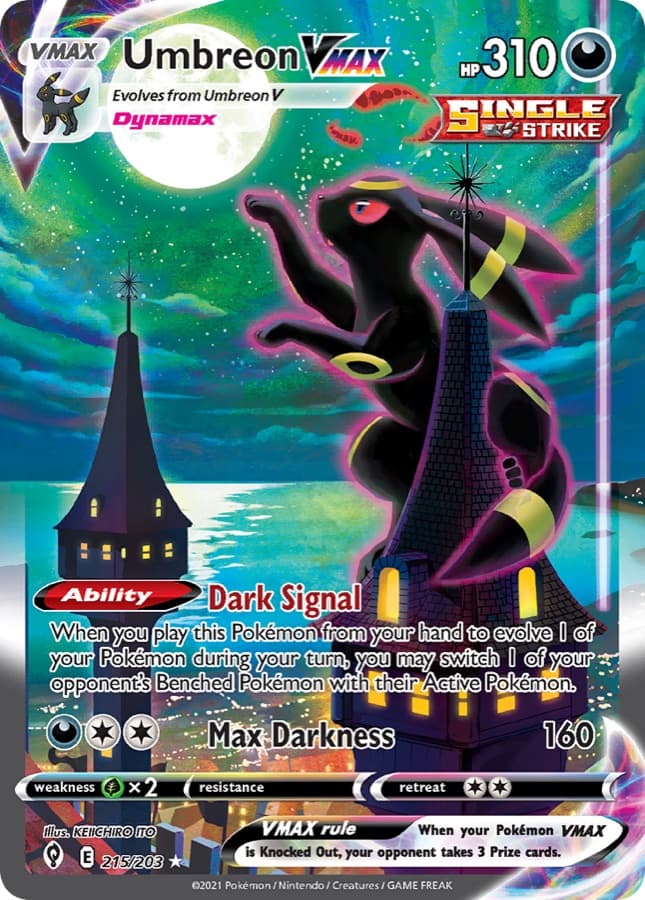
A secret rare is any card whose number is higher than the set total printed on it. The cover card is the classic example: Evolving Skies is numbered out of 203, and the alternate art Umbreon VMAX is 215/203. Anything past 203 in that set is a secret.
The name comes from the fact that those cards don’t appear in the set’s official count. Before Scarlet & Violet, secret rares were usually rainbow cards, gold cards and some alternate arts, and they used the same black star as other rares, so the number was the only giveaway. Today almost every chase card is numbered past the total: in Scarlet & Violet 151, which is numbered out of 165, the Charmander Illustration Rare is 168/165. The gold Hyper Rares that used to be called secret rares now have their own three-star symbol.
Watch for promo numbering, which works differently. Black Star Promos carry their own promo number, such as SWSH050, with no set total to beat.
What do Japanese rarity codes like SAR and AR mean?
Japanese cards print letters instead of symbols, and each one lines up with an English rarity. SAR is a Special Illustration Rare, AR is an Illustration Rare, and UR is the gold Hyper Rare. The trap is SR: in Japan it means the full-art card that English sets call Ultra Rare.
- CCommonEnglish Common
- UUncommonEnglish Uncommon
- RRareEnglish Rare
- RRDouble RareEnglish Double Rare
- ARArt RareEnglish Illustration Rare
- SRWatch outSuper RareEnglish Ultra Rare (full art)
- SARSpecial Art RareEnglish Special Illustration Rare
- URWatch outUltra RareEnglish Hyper Rare (gold)
- MURMega Ultra RareEnglish Mega Hyper Rare
- MAMega Attack RareEnglish Mega Attack Rare
| Code | Japanese name | English rarity |
|---|---|---|
| C | Common | Common |
| U | Uncommon | Uncommon |
| R | Rare | Rare |
| RR | Double Rare | Double Rare |
| AR | Art Rare | Illustration Rare |
| SRWatch out | Super Rare | Ultra Rare (full art) |
| SAR | Special Art Rare | Special Illustration Rare |
| URWatch out | Ultra Rare | Hyper Rare (gold) |
| MUR | Mega Ultra Rare | Mega Hyper Rare |
| MA | Mega Attack Rare | Mega Attack Rare |
Rarities don’t always match card for card, either. A card can be common in Japanese and uncommon in English. Our guide to Japanese Pokémon cards covers reading the rest of a Japanese card and how they sell against English copies.
How do you tell the rarity of a Pokémon card?
Read the symbol, then check the number against the set total. Those two things settle the rarity of almost any card in under a minute.
- Find the card number at the bottom. It looks like 095/203. The rarity symbol is right next to it.
- Read the symbol. Circle, diamond or star, and for modern cards the color and count of the stars.
- Compare the number with the total. A first number higher than the second, like 215/203, means a secret rare.
- Look at the finish. Holo, reverse holo, rainbow, gold or textured foil tells you which version of a rare you have.
- Check for stamps. A 1st Edition stamp, a PROMO star or a prerelease stamp changes which printing it is.
Does rarity decide how much a Pokémon card is worth?
No. Rarity tells you how hard a card is to pull, not what people will pay. Demand for the Pokémon and the art, the printing, and above all the condition set the price. Two cards with the same symbol can be thousands of dollars apart, and a common can outsell a Hyper Rare.
 Umbreon VMAX (alternate art)Evolving Skies · 215/203 · Secret Rare$2,324.50TCGplayer · Oct 21, 2026$2,324.50TCGplayer · Oct 21, 2026
- CharmanderScarlet & Violet 151 · 168/165 · Illustration Rare (one gold star)$86.72TCGplayer · Oct 21, 2026$86.72TCGplayer · Oct 21, 2026
- Umbreon VMAX (rainbow)Evolving Skies · 214/203 · Secret Rare$83.33TCGplayer · Oct 21, 2026$83.33TCGplayer · Oct 21, 2026
- Umbreon VMAXEvolving Skies · 095/203 · Ultra Rare$30.22TCGplayer · Oct 21, 2026$30.22TCGplayer · Oct 21, 2026
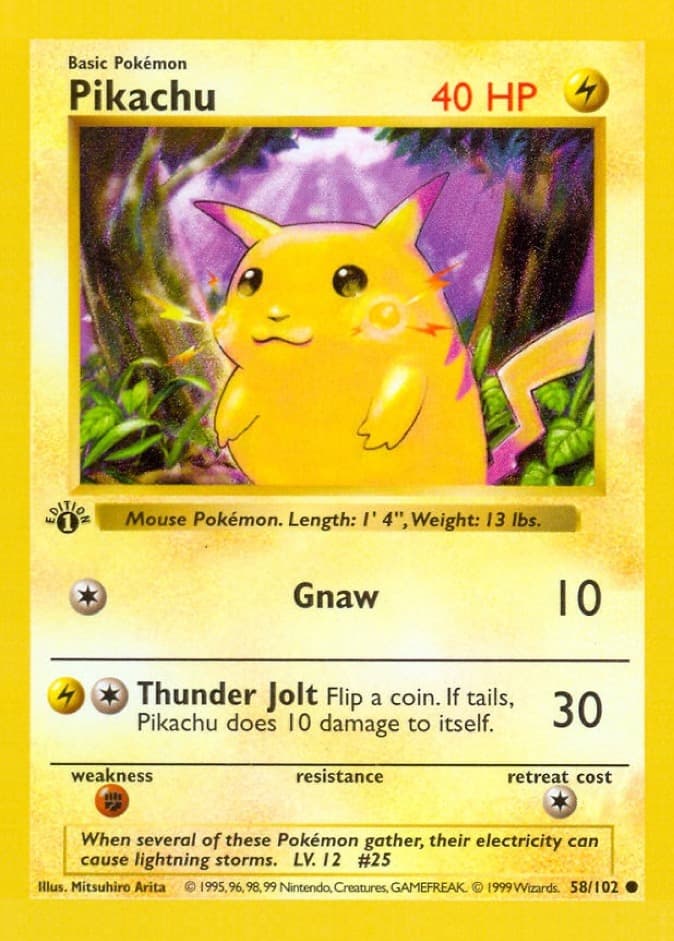
- PikachuBase Set, unlimited · 58/102 · Common$10.88TCGplayer · Oct 21, 2026$10.88TCGplayer · Oct 21, 2026
- Switch (gold)Scarlet & Violet 151 · 206/165 · Hyper Rare (three gold stars)$3.03TCGplayer · Oct 21, 2026$3.03TCGplayer · Oct 21, 2026
Three things stand out. The two Umbreon secret rares share a set, a Pokémon and a rarity, and the alternate art sells for about 28 times the rainbow one, because collectors want that art. In 151, a one-star Illustration Rare Charmander sells for about 29 times a three-star Hyper Rare, because a gold Trainer card has little pull. And a Base Set Pikachu with a plain circle beats that Hyper Rare too, because it’s old and it’s Pikachu.
Condition moves the number even more. The prices above are for raw near mint copies; a PSA 10 of the same card can sell for several times as much, and a creased copy for a fraction. That’s why the first question with any valuable card isn’t its rarity, it’s what grade it would get. The PSA grading scale explains what separates a 9 from a 10, and whether grading is worth it works through when the fee pays.
How do you find out what set a Pokémon card is from?
Read the set symbol or set code at the bottom, then search the card’s name and number in the official Pokémon TCG Card Database on pokemon.com. The number on its own isn’t enough, since dozens of sets have a card 25.
- Note the name and the full number. Write down both halves, like 168/165. The set total narrows the set fast.
- Read the set code or symbol. Modern cards print a code like MEW EN; older cards a small picture. No symbol on a 1999 card usually means Base Set.
- Search the official database. pokemon.com’s Card Database filters by name, expansion, rarity and illustrator, back to the earliest sets.
- Match the exact printing. Check the art, foil and stamps against the listing. A reverse holo, a 1st Edition and an unlimited copy of one card sell for very different amounts.
- Price that printing, not the card. Look up recent sold prices for that exact version and condition, not the asking prices.
Step four is where most mistakes happen. The same Pokémon can appear in one set as a regular rare, a full art and a secret rare, and in vintage sets as 1st Edition, shadowless and unlimited. Our guides to 1st Edition and shadowless cards and to what your Pokémon card is worth go through how to price each one.
Questions people ask
What is the rarest rarity symbol on a Pokémon card?
In current English packs the top tiers are Special Illustration Rare (two gold stars), Hyper Rare (three gold stars) and, in Mega Evolution sets, Mega Hyper Rare (a gold star with a black border). Which one is hardest to pull varies by set, and none of them guarantees a high price.
What does a gold star mean on a Pokémon card?
One gold star is an Illustration Rare, a full-art alternate version of an ordinary Pokémon. Two gold stars is a Special Illustration Rare and three is a Hyper Rare. A gold star with a black border is a Mega Hyper Rare.
What does a white or silver star mean on a Pokémon card?
Two silver stars mark an Ultra Rare: a full-art foil Pokémon ex or Supporter. The Pokémon Company describes them as shiny foil stars, so they can look white or silver depending on the light.
Is a holo card the same as a rare?
Not exactly. Holo is a finish and rare is a rarity. Before Scarlet & Violet, a black star card could be holo or non-holo; since then every Rare pulled from a pack is holo. Reverse holos come at every rarity, including commons.
What does SAR mean on a Pokémon card?
SAR stands for Special Art Rare, the Japanese code for what English sets call a Special Illustration Rare. AR, Art Rare, is the Japanese Illustration Rare.
Are Pokémon cards with no rarity symbol fake?
Not necessarily. Basic Energy cards have no rarity, promos carry a black star promo symbol instead, and some trainer kit cards show a Pokémon silhouette. A missing symbol on a card that should have one is worth a closer look, though.
Sources
- Pokémon, Pokémon TCG: Scarlet & Violet Revamps Pokémon TCG Card Aesthetic, March 30, 2023: rarity symbols and expansion codes (checked 21 October 2026)
- Pokémon, Pokémon TCG Card Database (checked 21 October 2026)
- Bulbapedia, Rarity (TCG): ACE SPEC, Shiny, Mega Hyper Rare, Mega Attack Rare, promos, Japanese codes; secondary source (checked 21 October 2026)
- CGC Cards, Understanding Pokémon Rarity Symbols and Card Features, updated March 26, 2026: symbol position, Mega Attack Rare stars, secret rare numbering (checked 21 October 2026)
- Torecamap, Pokémon card rarity guide (Japanese), updated October 2, 2026: SR as full-art Pokémon and Supporters; secondary source (checked 21 October 2026)
- TCGplayer, Umbreon VMAX (Alternate Art Secret) 215/203, Evolving Skies, Market Price (checked 21 October 2026)
- TCGplayer, Umbreon VMAX (Secret) 214/203, Evolving Skies, Market Price (checked 21 October 2026)
- TCGplayer, Umbreon VMAX 095/203, Evolving Skies, Market Price (checked 21 October 2026)
- TCGplayer, Charmander 168/165, Scarlet & Violet 151, Market Price (checked 21 October 2026)
- TCGplayer, Scarlet & Violet 151 search: Switch 206/165 Hyper Rare, Market Price (checked 21 October 2026)
- TCGplayer, Pikachu 58/102, Base Set, Market Price (checked 21 October 2026)
Buddy is independent and isn’t affiliated with PSA, CGC, Beckett, TAG, SGC or The Pokémon Company. Fees and prices change; we re-check them when we update a guide.