On this page
The short answer
Some Pokémon cards have made money, but treat them as a speculative collectible, not a savings plan. The Pikachu Illustrator went from $5.3 million in 2021 to $16.5 million in 2026, while some sealed boxes are down on the year. Selling fees take about 13% of every sale, so a card has to rise roughly 17% just to break even.
Collectors have been asking this since the 2021 boom, and the honest answer has two halves. The best cards have beaten the stock market by a mile. Most cards haven’t, and the costs of buying, grading and selling are bigger than people think. This guide goes through what the numbers show, what eats into returns, how sealed, raw and graded cards compare, and the habits of collectors who come out ahead.
What does the data say about Pokémon cards as an investment?
At the very top, the returns have been huge. Card Ladder, which tracks card sales, told Fortune in July 2025 that Pokémon cards were up 3,261% over 20 years, and told NPR in April 2026 that its index of thousands of rare Pokémon cards was up about 170% in a single year.
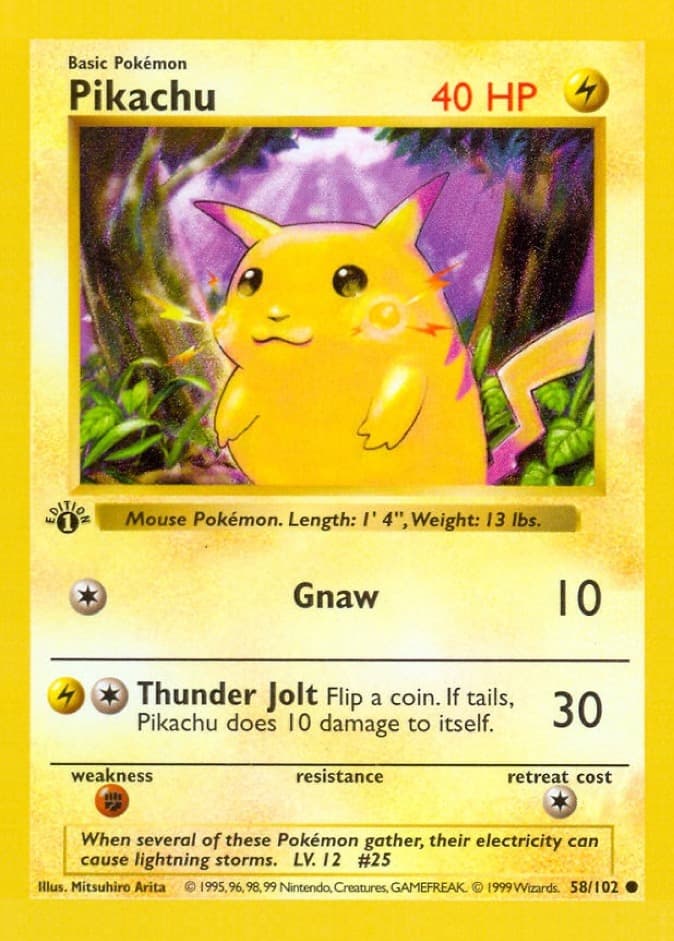
The record sales show the same thing at the extreme. Logan Paul bought a PSA 10 Pikachu Illustrator privately in 2021 for $5,275,000. Goldin sold it on 16 February 2026 for $16,492,000, which Guinness World Records confirmed as the most paid for any trading card at auction.
- Pikachu Illustrator, PSA 10 (private sale)When 2021$5,275,000
- Same card, Goldin auctionRecordWhen Feb 2026$16,492,000
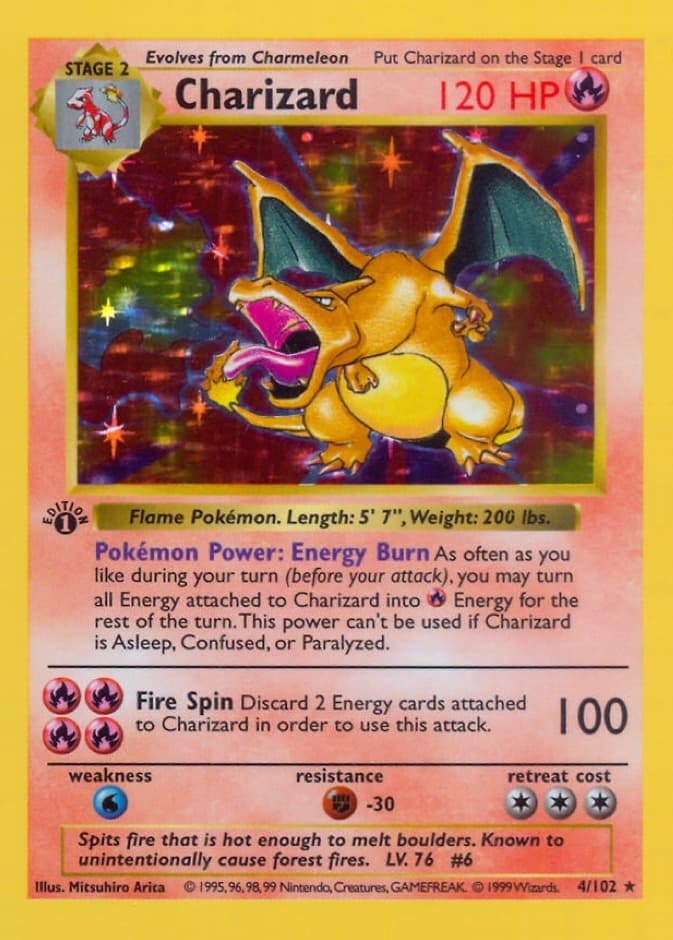
- 1st Edition Base Set Charizard, PSA 10, PWCCWhen Mar 2022$420,000
- 1st Edition Base Set Charizard, PSA 10, HeritageWhen Dec 2025$550,000
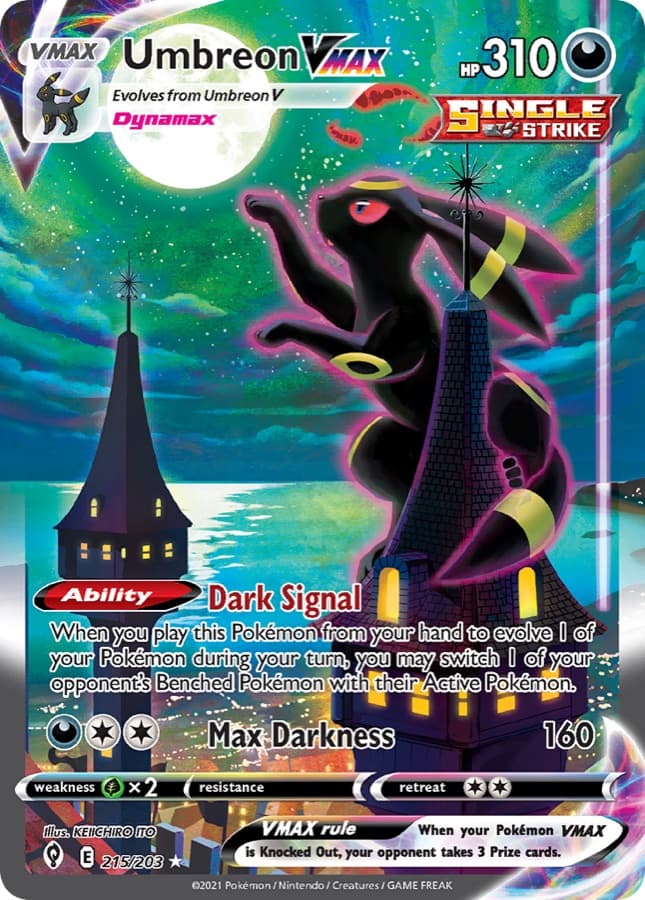
- Umbreon VMAX 215/203, raw near mint, TCGplayer market priceWhen Oct 2026$2,236.75
| Card | When | Price |
|---|---|---|
| Pikachu Illustrator, PSA 10 (private sale) | 2021 | $5,275,000 |
| Same card, Goldin auctionRecord | Feb 2026 | $16,492,000 |
| 1st Edition Base Set Charizard, PSA 10, PWCC | Mar 2022 | $420,000 |
| 1st Edition Base Set Charizard, PSA 10, Heritage | Dec 2025 | $550,000 |
| Umbreon VMAX 215/203, raw near mint, TCGplayer market price | Oct 2026 | $2,236.75 |
Two things are easy to miss. First, indexes and records track the cards people want most, and they’re measured before anyone pays a fee. They don’t tell you what a typical binder did. Second, look at the Charizard: the March 2022 record stood for almost four years, and the copy that finally beat it in December 2025 sold for about 31% more, before costs. If you want to see which cards sit at the top, our list of the most valuable Pokémon cards has them with sources.
What happened in the 2021 boom and the 2022–23 cooling?
Prices surged in 2020 and 2021, then cooled for about two years as The Pokémon Company printed far more cards. Demand came back from 2024, and since then supply has been the story.
TCGplayer’s own account, written in May 2024, ties the boom to lockdowns, stimulus money, Logan Paul’s pack opening stream in October 2020 and the franchise’s 25th anniversary in 2021. Over the next two years The Pokémon Company tripled card production and the market cooled. The same article puts 2022’s output at 9.7 billion cards, and notes that the alternate art Umbreon VMAX had moved between $400 and $700 for years before its first ungraded sale above $1,000 on 6 May 2024.
Since then, shortages have come back with every hit set. In January 2025 The Pokémon Company said it was printing Prismatic Evolutions “at maximum capacity” after it sold out, and Wargamer reported Elite Trainer Boxes reselling for about $400 that week. Its product availability notice, last updated on 26 May 2026, says it is “maximizing production” for future expansions and will keep reprinting products that are hard to find. By the end of March 2026 it had produced over 85 billion cards in total.
Is the Pokémon card market crashing in 2026?
There’s no single crash in the numbers, but there are sharp drops in parts of the market. Over the last year some sealed products fell 15% or more while others rose 70%, and every item below is under its 2026 high.
- Evolving Skies booster boxLate Oct 2025 $2,580 · Year high $2,715 (Jun)$2,179
- Prismatic Evolutions Elite Trainer BoxLate Oct 2025 $132 · Year high $212 (Mar)$122
- Scarlet & Violet 151 Booster BundleLate Oct 2025 $97 · Year high $239 (Apr)$167
- Umbreon VMAX 215/203 (raw)Late Oct 2025 $2,247 · Year high $2,411 (Aug)$2,237
| Product | Late Oct 2025 | Year high | Mid Oct 2026 |
|---|---|---|---|
| Evolving Skies booster box | $2,580 | $2,715 (Jun) | $2,179 |
| Prismatic Evolutions Elite Trainer Box | $132 | $212 (Mar) | $122 |
| Scarlet & Violet 151 Booster Bundle | $97 | $239 (Apr) | $167 |
| Umbreon VMAX 215/203 (raw) | $2,247 | $2,411 (Aug) | $2,237 |
Read across the rows. The Evolving Skies box, a favorite of sealed collectors, is down about 16% on the year. The Prismatic Evolutions box is about a third of what it resold for in its launch week and 43% below its March high. The 151 bundle is up 72% on the year but 30% below April. The Moonbreon is flat, after dropping to about $1,680 in February. Anyone who bought one of these at its 2026 high is behind today, before fees.
Is there a Pokémon card bubble?
Nobody can call the top, and we won’t try. What you can see is the worry. In NPR’s April 2026 report, Card Ladder co-founder Joshua Johnson said modern cards depend on the same buyers paying ever higher prices, and that a loss of confidence could hit hard because there’s so much supply. Cards also pay nothing while you hold them. No dividend, no rent: the only return is the price someone pays you later.
What costs eat into Pokémon card returns?
Selling fees of about 13%, postage, grading, the gap between buying and selling prices, storage and tax. Together they mean a card has to rise well above what you paid before you’ve made anything.
- eBay selling feeWhat it is Final value fee, trading cardsTypical amount 13.25% up to $7,500, plus $0.40 per order
- TCGplayer selling feeWhat it is Commission plus transaction feeTypical amount 10.75% (capped at $75 per product) + 2.5% + $0.30
- Auction buyer’s premiumWhat it is Added on top of the winning bidTypical amount About 24% on the Illustrator ($13.3M bid, $16.49M paid)
- PSA gradingWhat it is Per card, by value after gradingTypical amount $59.99 Standard to $599 Premier; Value tiers paused
- Postage and insuranceWhat it is Each way, more for valuable cardsTypical amount Varies by carrier and declared value
- US federal tax on gainsOften forgottenWhat it is Collectibles held over a yearTypical amount Up to 28%
| Cost | What it is | Typical amount |
|---|---|---|
| eBay selling fee | Final value fee, trading cards | 13.25% up to $7,500, plus $0.40 per order |
| TCGplayer selling fee | Commission plus transaction fee | 10.75% (capped at $75 per product) + 2.5% + $0.30 |
| Auction buyer’s premium | Added on top of the winning bid | About 24% on the Illustrator ($13.3M bid, $16.49M paid) |
| PSA grading | Per card, by value after grading | $59.99 Standard to $599 Premier; Value tiers paused |
| Postage and insurance | Each way, more for valuable cards | Varies by carrier and declared value |
| US federal tax on gainsOften forgotten | Collectibles held over a year | Up to 28% |
Here’s what that does to a round trip. Say you buy a raw card for $500 and later sell it on eBay for the same $500.
You’ve lost about $72 on a card that didn’t move. To break even it has to sell for about $583, a rise of roughly 17%. TCGplayer’s fees come out almost the same. And that’s the cheap case: grading adds a fee and postage both ways, and an auction adds a buyer’s premium on the way in. The guide to where to sell Pokémon cards compares what each place takes.
The other cost is the spread. You buy at retail, often at an asking price above recent sales, and when you sell to a shop or a dealer, they pay below market so they can resell with their own fees and margin. Paying 10% too much on the way in costs you as much as the fee on the way out. So the price you pay matters more than anything else you control.
Sealed, raw or graded: which holds value best?
Each one is a different bet. Sealed bets on a set staying out of print, raw singles on demand for one card, and graded singles on a high grade staying scarce. None of them is safe.
| Question | Sealed product | Raw singles | Graded singles |
|---|---|---|---|
| What you’re betting on | The set goes out of print and opened boxes take supply away | Demand for that card and art keeps rising | Few copies reach the top grade, so the slab stays scarce |
| Biggest risk | Reprints, and a box that falls with the set’s chase cards | Condition: a scratch or soft corner cuts the price | More 10s get graded, or the card comes back a 9 |
| Extra costs | Storage space, and shipping a heavy box | Sleeves, toploaders, careful shipping | Grading fee, postage both ways, months of waiting |
| Fake and tamper risk | Resealed boxes and weighed packs | Counterfeits, especially chase cards | Lower, but fake slabs exist; check the cert |
| How easy to sell | 11,191 Prismatic ETBs sold; 243 Evolving Skies boxes | 119 near mint Moonbreons sold on TCGplayer | Easiest at PSA 10; lower grades often sell near raw |
Sealed is the simplest to hold, but it ties up the most money per item and the most shelf space, and a box is only worth what the cards inside it are worth to the next buyer. Raw singles are the most flexible, but you only know their condition as well as the photos let you. Graded cards are easier to trust and to sell, but only the top grade usually carries a premium: on many modern cards a PSA 9 sells for about what a raw copy does. Whether a slab pays is a sum you can do, and our guide on whether grading Pokémon cards is worth it runs it on real sales.
What are the biggest risks of investing in Pokémon cards?
Supply you can’t control, condition you can’t always see, fakes, and how hard it can be to sell at the price you want. Most losses come from one of these.
- Reprints and print runs. The Pokémon Company says it reprints products that sell out and maximizes production of new sets. A box that’s scarce today can be back on shelves in a few months.
- Condition. The gap between a 9 and a 10 can be one white speck on a back corner, and that gap is often thousands of dollars. Our PSA 9 vs PSA 10 guide shows how much.
- Fakes and tampering. Chase cards are counterfeited, packs are searched and resealed, and slabs are faked. Learn how to tell if a Pokémon card is fake before you buy anything expensive.
- Liquidity. Popular sealed products sell thousands of times a year, while the $2,000 Evolving Skies box sold 243 times on TCGplayer in a whole year. If you need cash fast, you take what’s offered.
- Hype and buyouts. TCGplayer has documented buyers cornering a card to push its price up. Prices pushed up that way can fall just as fast.
- Storage damage. Humidity, sunlight and loose handling ruin cards and boxes. See how to store Pokémon cards.
How do collectors who do well with Pokémon cards behave?
They buy carefully, hold for a long time and count every cost. None of these habits guarantees a gain, but each one removes a common way to lose money.
- Buy what you’d keep if it never went up. If the card or box would still make you happy at half the price, a bad year doesn’t force you to sell.
- Price from sold listings, not asking prices. Asking prices are what sellers hope for. Recent sales of the same printing in the same condition are what the card is worth.
- Check condition and authenticity before paying. Look at the photos of the corners, edges and back, and run the basic fake checks. A card that grades a 7 isn’t the card in the price guide.
- Wait out launch weeks. New sets often resell far above shop price in the first weeks, then fall as reprints arrive, as Prismatic Evolutions did.
- Work out the break-even before buying. Add the selling fee, postage and any grading to what you pay. That’s the number the card has to beat.
- Never use money you might need. Fortune’s 2025 report included someone who ran up $26,000 of credit card debt trying to resell Pokémon cards. Cards can’t be sold in a hurry without a discount.
- Keep records. Note what you paid, fees and dates. In the US, gains on collectibles can be taxed at up to 28%.
So, are Pokémon cards a good investment?
They can be a good collectible that sometimes goes up a lot. They’re a poor substitute for savings. The cards at the top have beaten almost everything over the long run, but the path ran through a two-year cooling, the market swings hard from month to month, and every sale costs about 13% plus postage. If you buy what you love, pay a fair price for its real condition, keep it safe and hold it for years, you give yourself the best chance of coming out ahead. If you need the money back at a set time, cards are the wrong place for it.
Questions people ask
Is the Pokémon card market crashing?
Not across the board. Between late October 2025 and mid October 2026, TCGplayer prices for some sealed products fell 15% or more while others rose about 70%, and most items were below their spring 2026 highs. Individual cards and boxes can drop sharply even when the overall market looks strong.
Is there a Pokémon card bubble?
Some people in the hobby think parts of the modern market look like one. In April 2026, Card Ladder’s co-founder told NPR that modern cards rely on the same buyers paying ever higher prices and could fall if confidence breaks. Nobody can say when or whether that happens.
Is it worth it to start collecting Pokémon cards in 2026?
As a hobby, yes, if you enjoy it and spend what you can afford. As a way to make money, start small, learn what cards really sell for, and count fees before you buy. A card has to rise around 17% just to cover eBay fees and postage.
Are sealed Pokémon booster boxes a good investment?
Some older boxes have risen a lot, but sealed product can fall too: the Evolving Skies booster box lost about 16% on TCGplayer in the year to October 2026. Reprints, storage and slow sales are the main risks.
How are profits from Pokémon cards taxed?
In the US, the IRS treats cards as collectibles, and net long-term gains on collectibles are taxed at a maximum rate of 28%. Keep records of what you paid and the fees, and ask a tax professional about your own situation.
Sources
- Guinness World Records, Logan Paul’s rare Pokémon card becomes most expensive ever sold, 16 February 2026 (checked 25 October 2026)
- Heritage Auctions, Intelligent Collector: PSA 10 Charizard sets record at $550,000, 16 December 2025 (checked 25 October 2026)
- Jamaica Observer, citing CNN: Charizard Pokémon card sold for $420,000 at auction (PWCC), 26 March 2022 (checked 25 October 2026)
- NPR, The Indicator from Planet Money: Why Pokémon cards are growing faster than your retirement account, 1 April 2026 (checked 25 October 2026)
- Fortune, Gen Z men are obsessed with Pokémon cards, 12 July 2025: Card Ladder figures (checked 25 October 2026)
- TCGplayer, Why Are Pokémon Card Prices Going Nuts?, 8 May 2024: boom, cooling, production, buyouts (checked 25 October 2026)
- The Pokémon Company, Pokémon in Figures, as of the end of March 2026: total card production (checked 25 October 2026)
- Pokémon Support, Update on Pokémon Trading Card Game Product Availability, updated 26 May 2026 (checked 25 October 2026)
- ComicBook.com, Pokémon TCG statement on Prismatic Evolutions printing at maximum capacity, 15 January 2025 (checked 25 October 2026)
- Wargamer, Prismatic Evolutions reprint promised: Elite Trainer Box resale prices, 16 January 2025 (checked 25 October 2026)
- TCGplayer, Umbreon VMAX (Alternate Art Secret) 215/203 market price and price history (checked 25 October 2026)
- TCGplayer, Evolving Skies Booster Box market price and price history (checked 25 October 2026)
- TCGplayer, Prismatic Evolutions Elite Trainer Box market price and price history (checked 25 October 2026)
- TCGplayer, Scarlet & Violet 151 Booster Bundle market price and price history (checked 25 October 2026)
- eBay, Selling fees: final value fee for collectible card games (checked 25 October 2026)
- TCGplayer, TCGplayer Fees, updated 5 October 2026 (checked 25 October 2026)
- PSA, Trading card grading services and prices (psacard.com, prices as reported 16 October 2026)
- cardgrade.io, PSA backlog falls to 8.2 million: PSA tier price table verified 16 October 2026; secondary source (checked 25 October 2026)
- IRS, Topic no. 409, Capital gains and losses: 28% maximum rate on collectibles (checked 25 October 2026)
Buddy is independent and isn’t affiliated with PSA, CGC, Beckett, TAG, SGC or The Pokémon Company. Fees and prices change; we re-check them when we update a guide.