On this page
The short answer
Grading a Pokémon card means sending it to a company such as PSA, CGC, Beckett, TAG or SGC, which checks it’s genuine, scores its condition from 1 to 10 and seals it in a numbered plastic slab. On 25 October 2026 the cheapest tiers run from $17 a card at CGC to $59.99 at PSA.
Grading looks complicated from the outside: five companies, a dozen tiers each, forms, declared values, waits measured in business days. It isn’t. You pick a few cards, check them hard, choose a grader and a tier, send them off and wait. This page walks through the whole thing once, with fees checked today, and points you to the deeper guides when you need the detail.
What does it mean to get a Pokémon card graded?
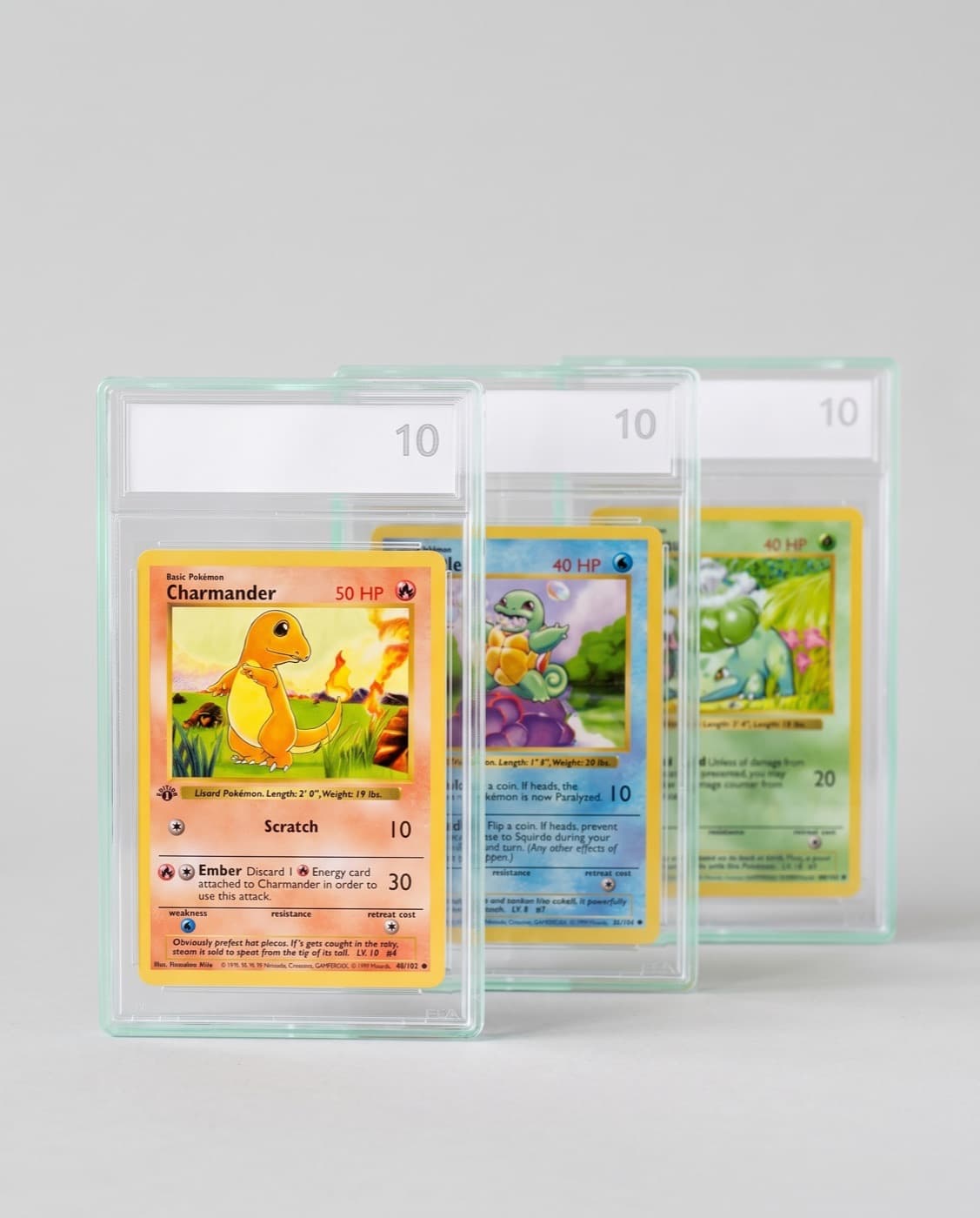
It means paying an independent company to authenticate the card, give it a condition grade, usually on a 1 to 10 scale, and seal it in a tamper-evident case with a label and a certificate number. Anyone can then look that number up to check the slab is real.
Authentication comes first. PSA, for example, says its graders check every card is genuine and look for trimming or recoloring before they grade it; a fake or altered card comes back without a number grade. Then the card is graded on four things, centering, corners, edges and surface, and the weakest of them usually sets the grade. PSA calls a 10 “a virtually perfect card.” Our PSA grading scale guide goes through every grade from 1 to 10.
Does grading make a Pokémon card worth more?
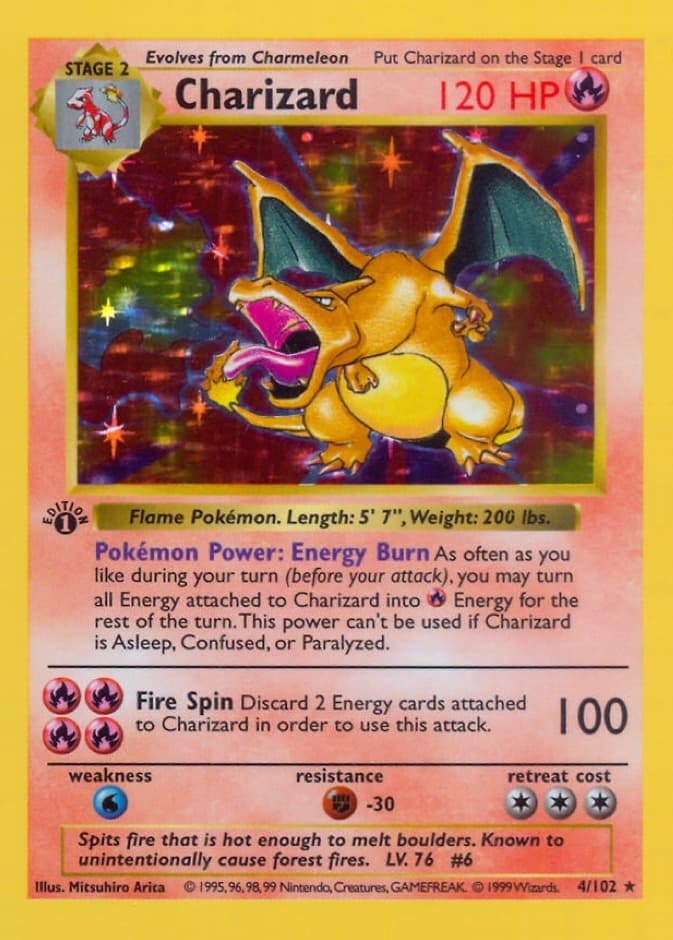
Only when the number on the slab is high. On modern cards, a 10 is where the money is; a 9 often sells for about what a clean raw copy does. Here’s the most traded modern Charizard today.
- Raw (ungraded)vs raw —$307
- PSA 9vs raw +12%$345
- PSA 10Where the money isvs raw +315%$1,275
| Condition | Typical price | vs raw |
|---|---|---|
| Raw (ungraded) | $307 | — |
| PSA 9 | $345 | +12% |
| PSA 10Where the money is | $1,275 | +315% |
A PSA 9 adds less than $40, which doesn’t cover the cheapest PSA fee. A PSA 10 is worth about four times a raw copy. That gap is why the whole hobby obsesses over 10s, and why the most useful thing you can do before grading is work out honestly whether your card could get one. PSA 9 vs PSA 10 looks at that gap across more cards. Vintage is different: clean Base Set era holos are scarce, so 8s and 9s can still carry a real premium.
How do you get Pokémon cards graded?
You create an order on the grader’s website, pack the cards and post them, or hand them over in person, then wait for the slabs to come back. Here’s the whole process in order.
- Pick the cards. Choose cards that are valuable and clean enough to have a shot at a high grade. Most cards in a binder aren’t worth the fee; more on picking them below.
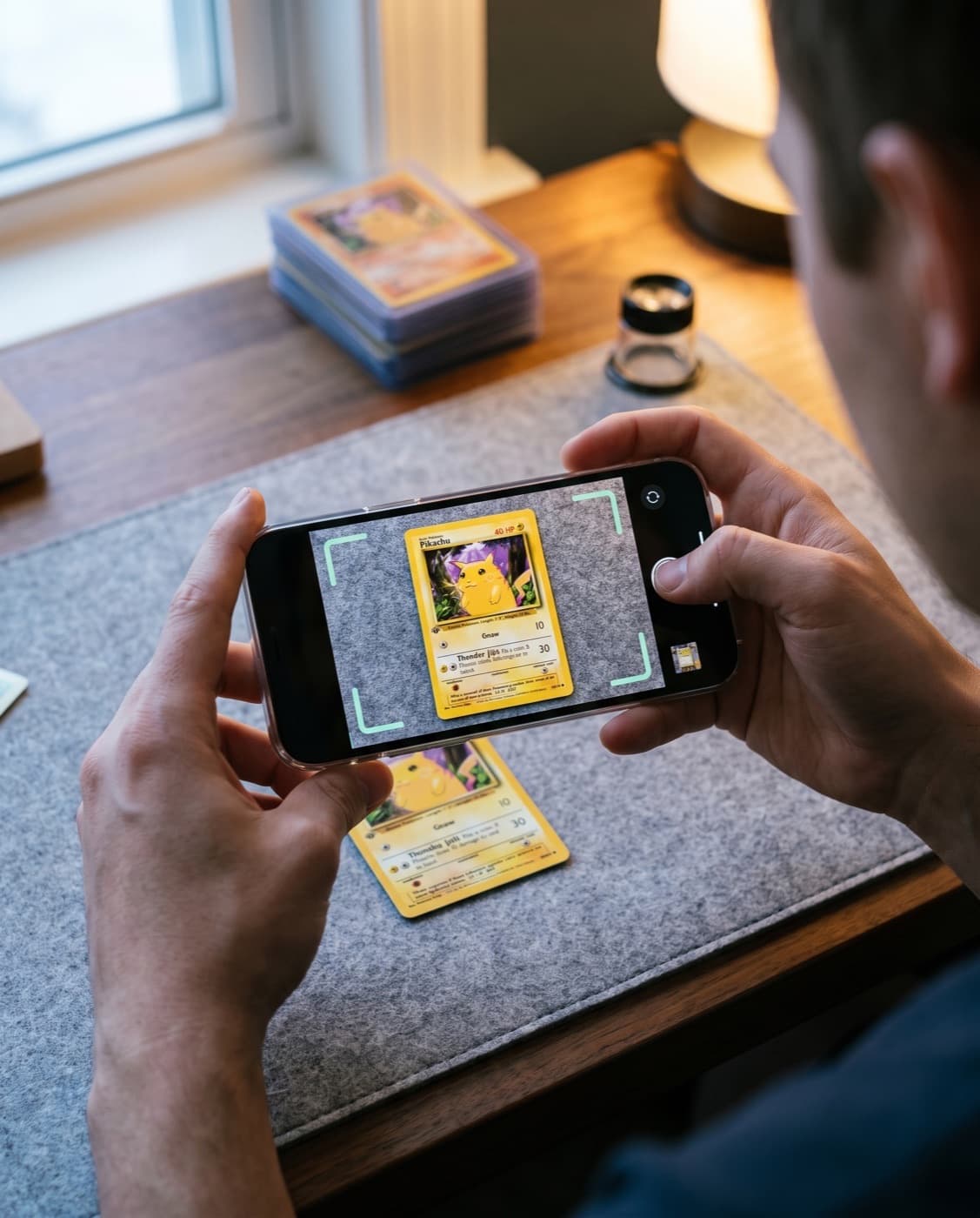
- Check their condition. Under a bright light, look at the centering, all eight corners, the edges on the back and the surface at an angle. One flaw you can see usually rules out a 10.
- Choose a grader. PSA for the best resale on most cards, CGC for the lowest price, TAG or Beckett if you want to know why a card got its grade. The comparison below sets them side by side.
- Choose a tier. Tiers trade price for speed, and each has a maximum value per card. You declare what the card will be worth after grading, and that, not what you paid, sets the tier.
- Submit online or in person. PSA says every submission starts with an order in its Online Submission Center, even if you hand the cards in at a show. Or skip the form: GameStop takes PSA submissions in participating stores.
- Wait. Anything from a few days on the expensive express tiers to about seven months on CGC’s cheapest. PSA quotes its $59.99 Standard tier at 90 to 100 business days, roughly four and a half months.
- Get your slabs back. Check each label against the card and look up the certificate number on the grader’s site. Then decide whether to keep or sell.
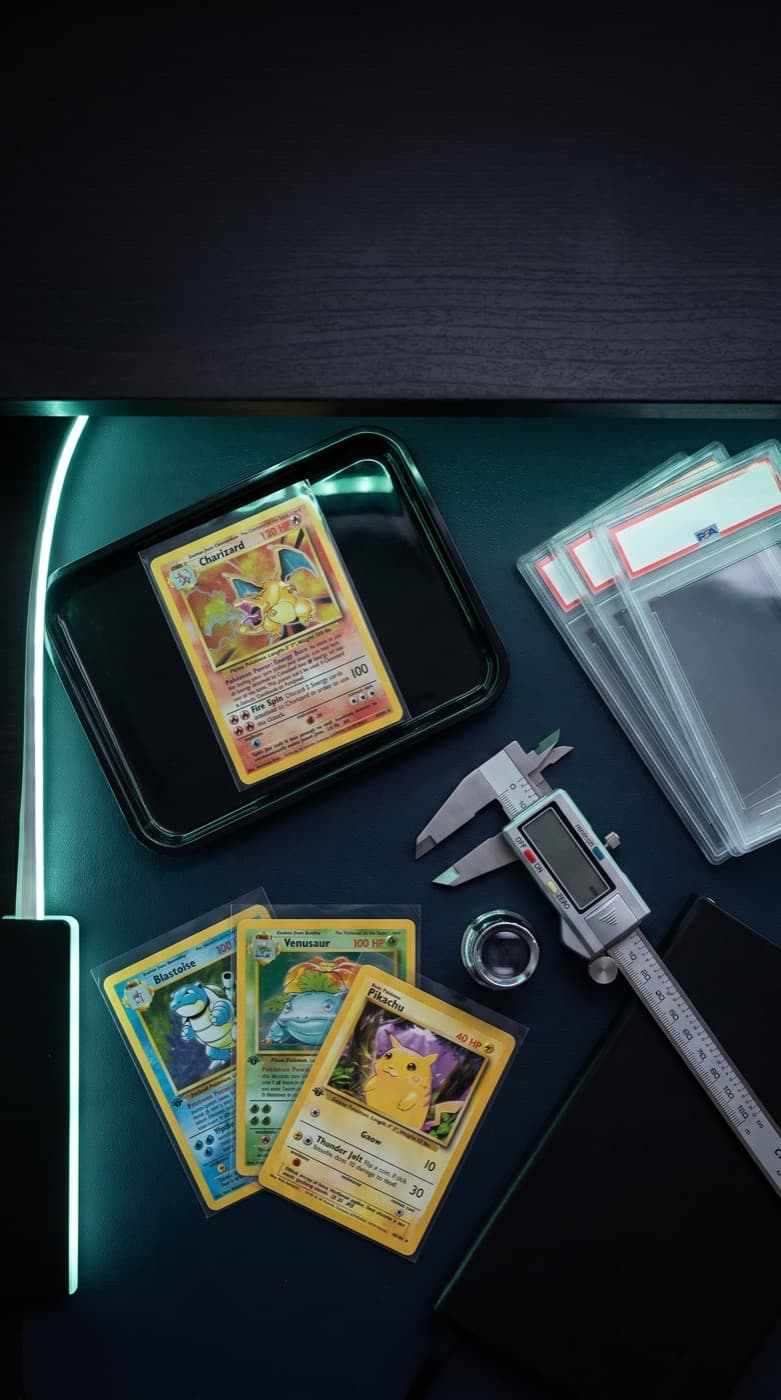
Packing matters more than people think: a penny sleeve, then a semi-rigid holder such as a Card Saver, then a sturdy box with no room for the cards to slide. How to submit cards to PSA covers the form, packing and shipping step by step, and where to get Pokémon cards graded compares mailing it yourself with GameStop, card shows and group submitters. GameStop’s price on 25 October 2026 was $59.99 a card plus $9.99 an order, for cards worth up to $1,000, with no form and no minimum.
Which company should you use to grade Pokémon cards?
For cards you might sell, PSA, because its 10s sell for the most on most cards. For your own collection or mid-value cards, CGC is the cheapest. Here are all five on the things that matter to a first submission.
| Question | PSABest resale | CGC | TAG | SGC | Beckett (BGS) |
|---|---|---|---|---|---|
| Cheapest open tier | $59.99 Standard, cards up to $1,000 (Value tiers paused) | $17 Bulk, 25-card minimum, cards up to $500 | $29.95 Value, 10-card minimum, just reopened | $50 Standard, cards up to $1,500 | $79.95 Express (Base and Standard paused at last report) |
| Its turnaround | 90–100 days | 150 working days | 90 days | 40+ days | About 15 days |
| Faster option | $199 Express, 20–30 days | $55 Standard, about 10 working days | $79.95 Priority, 30 days | From $150 Expedited, 2–3 days | Express is the fast tier |
| Top grade | Gem Mint 10; no 9.5 | Pristine 10 above Gem Mint 10 | Pristine 10 (score 990+) | Pristine 10 above Gem Mint 10 | Black Label Pristine 10 |
| Best for | Selling a likely 10 | Cheap, fast, your own binder | Seeing exactly why: a defect map with every card | A classic black label | A card you think is flawless |
Two things a beginner should know. First, PSA has no 9.5, so a near-perfect card lands on a 9 or a 10 there; CGC, SGC and Beckett can give it a 9.5. Second, the price you see is per card and doesn’t include shipping both ways. The best grading company for Pokémon cards compares what each company’s 10s actually sell for, and there are full guides to TAG, SGC, Beckett and CGC’s fees.
How much does it cost to get a Pokémon card graded?
Between $17 and $59.99 a card at the cheapest open tiers, plus shipping, and more if the card is valuable, because each tier caps the value it covers. At PSA the tiers on 25 October 2026 were these.
- StandardCheapestMax value $1,000 · Turnaround 90–100 days$59.99
- PriorityMax value $1,500 · Turnaround 70–80 days$79.99
- ExpressMax value $2,500 · Turnaround 20–30 days$199
- Super ExpressMax value $5,000 · Turnaround 10–15 days$349
- PremierMax value $10,000 · Turnaround 7–10 days$599
| Tier | Per card | Max value | Turnaround |
|---|---|---|---|
| StandardCheapest | $59.99 | $1,000 | 90–100 days |
| Priority | $79.99 | $1,500 | 70–80 days |
| Express | $199 | $2,500 | 20–30 days |
| Super Express | $349 | $5,000 | 10–15 days |
| Premier | $599 | $10,000 | 7–10 days |
The max value is what the card will be worth after grading, not now. The 151 Charizard above sells for about $307 raw, but a PSA 10 is worth about $1,275, so it belongs in Priority at $79.99, not Standard. Under-declare and PSA can bill you for the right tier before it returns the card. What PSA grading costs has every tier, extra and shipping charge.
What do graders look at on a Pokémon card?
Every grader checks the same four things on both sides of the card: centering, corners, edges and surface. They differ in how strict they are and in how they combine the four into one number.
- CenteringWhat they look for How even the borders are, left to right and top to bottom, front and back. A PSA 10 allows about 55/45 on the front and 75/25 on the back.Common Pokémon problem Modern cards cut off-center straight from the pack
- CornersWhat they look for Sharp, square points with no rounding, fraying or white dots.Common Pokémon problem Tiny white nicks on the back corners
- EdgesWhat they look for Clean, smooth edges with no chipping or roughness.Common Pokémon problem Whitening along the dark blue back
- SurfaceWhat they look for No scratches, dents, print lines, stains or loss of gloss.Common Pokémon problem Scratches on the holo and factory print lines
| Area | What they look for | Common Pokémon problem |
|---|---|---|
| Centering | How even the borders are, left to right and top to bottom, front and back. A PSA 10 allows about 55/45 on the front and 75/25 on the back. | Modern cards cut off-center straight from the pack |
| Corners | Sharp, square points with no rounding, fraying or white dots. | Tiny white nicks on the back corners |
| Edges | Clean, smooth edges with no chipping or roughness. | Whitening along the dark blue back |
| Surface | No scratches, dents, print lines, stains or loss of gloss. | Scratches on the holo and factory print lines |
The back is where most Pokémon cards lose their 10. Its dark blue border shows every speck of whitening, and the front hides it. And because the weakest area caps the grade, a card with perfect corners and one visible scratch is still a 9 or lower. Our guides to Pokémon card centering and Pokémon card condition show what each flaw looks like.
Can you grade Pokémon cards yourself?
You can pre-grade them, and you should, but only a grading company’s slab counts when you sell. Use a bright lamp or a phone flashlight held at an angle, a loupe if you have one, and look at the back first. If you find a flaw, assume a 9 at best and price the card that way.
Which Pokémon cards should you get graded?
Send cards that are worth well over $100 raw, have a big jump in price at a 10, and look clean enough to get one. Most cards fail at least one of those three, and that’s fine.
- Send: clean vintage holos, modern special illustration rares and alt arts of popular Pokémon pulled straight into a sleeve, and expensive cards you want authenticated before you sell.
- Send if it matters to you: a card you’ll keep forever. The fee then buys protection and display, not profit.
- Skip: bulk and cheap holos, where even a 10 barely covers the fee and postage.
- Skip: anything with whitening, a soft corner, a visible scratch or obvious off-centering. That caps it at an 8 or 9, which on modern cards often sells for less than raw plus the fee.
- Check first: anything you bought raw that you’re not sure is genuine. A fake comes back ungraded and you still pay. How to tell if a Pokémon card is fake covers the checks.
The quick test: take the PSA 10 price, subtract the raw price, and see if the difference beats the grading fee and shipping by a comfortable margin, remembering a 10 is never certain. Is it worth grading Pokémon cards? turns that into a proper break-even sum with real sales.
Is grading Pokémon cards worth it for a beginner?
Yes, for a handful of the right cards; no, for most of a collection. Start small: pick two or three of your best cards, check them under light, send them to one grader at its cheapest tier that covers their graded value, and see how the grades compare with what you expected. That first order teaches you more about condition than any guide, and it keeps the cost of learning low.
Questions people ask
How much does it cost to grade a $100 card?
On 25 October 2026 the cheapest options for a card worth $100 after grading were CGC Bulk at $17 (25-card minimum), CGC Economy at $20, TAG Value at $29.95 (10-card minimum), SGC at $50 and PSA Standard at $59.99. Shipping both ways is extra at every grader.
Does GameStop do card grading?
Yes. Participating GameStop stores take Pokémon and other cards for PSA grading at $59.99 a card plus a flat $9.99 an order, for cards worth up to $1,000, with no submission form or card minimum. GameStop sends the cards to PSA, so the grade is a normal PSA grade with PSA’s 90 to 100 business day estimate.
How long does it take to get Pokémon cards graded?
It depends on the grader and the tier. PSA’s $59.99 Standard tier was quoted at 90 to 100 business days in October 2026, while CGC’s $55 Standard tier was about 10 working days and Beckett’s Express about 15. Paying more almost always means waiting less.
What is the best grade for a Pokémon card?
A 10. At PSA it’s Gem Mint 10, the top of the scale. CGC, SGC and TAG also have a Pristine 10 above their Gem Mint 10, and Beckett’s highest grade is the Black Label Pristine 10, which needs a perfect score in all four subgrades.
Can you get a Pokémon card graded for free?
No. Every major grader charges per card, and the cheapest open tier on 25 October 2026 was CGC Bulk at $17 a card with a 25-card minimum. Card shops and online tools can give you an opinion, but only a grading company can put a card in a slab.
Should I clean my Pokémon card before grading?
Only gently. A clean microfiber cloth to lift dust or fingerprints from the surface is fine, but never use liquids or rub hard, and never press or trim a card. Graders look for alterations, and an altered card comes back without a grade.
Sources
- PSA, Trading card grading services and prices (checked 25 October 2026)
- PSA, Grading standards: Gem Mint 10 definition and centering (checked 25 October 2026)
- PSA Support, How do I make a submission? (checked 25 October 2026)
- CGC Cards, Services and fees for trading cards (checked 25 October 2026)
- TAG Grading, Pricing: Value, Base, Standard, Priority, Express and Premier (checked 25 October 2026)
- SGC, Card grading services and pricing (read 21 October 2026; blocked our check on 25 October)
- CardGrade.io, SGC raises its lowest grading price to $50, 2 September 2026 (secondary; checked 25 October 2026)
- CardGrade.io, BGS grading cost: Beckett tiers from its temporary order form, verified 21 September 2026 (secondary; checked 25 October 2026)
- Heavy, Beckett pauses Base and Standard grading again (secondary; via search, 25 October 2026)
- CardGrade.io, Beckett back online, 16 October 2026: open tiers not confirmed (secondary; checked 25 October 2026)
- CardGrade.io, PSA pauses Value tiers from 2 June 2026, last verified 21 September 2026 (secondary; checked 25 October 2026)
- GameStop, PSA card grading service (checked 25 October 2026)
- TCG Charts, Charizard ex #199 (151): raw, PSA 9 and PSA 10 prices (checked 25 October 2026)
Buddy is independent and isn’t affiliated with PSA, CGC, Beckett, TAG, SGC or The Pokémon Company. Fees and prices change; we re-check them when we update a guide.